Concept 18: The Future of AI - Integration and Ethics
Concept 18: The Future of AI - Integration and Ethics
ℹ️ Definition: The future of AI lies in integrated systems that combine reinforcement learning, generative AI, and multi-modal understanding to create autonomous agents capable of reasoning, tool use, and ethical decision-making. This lesson explores AI agent architectures, safety, ethics, and the path toward artificial general intelligence (AGI).
Learning Objectives
By the end of this lesson, you will be able to:
- Design AI agent architectures that integrate RL, GenAI, and multi-modal capabilities
- Implement tool-use systems with function calling and the ReAct framework
- Understand AI safety challenges (alignment, interpretability, robustness)
- Apply ethical principles and fairness metrics to AI systems
- Analyze the path toward AGI and the technical requirements
- Evaluate responsible AI practices for deployment and monitoring
Introduction: The Integration of Everything
Congratulations! You've reached the final lesson of AI-2.5. Let's reflect on the journey:
- Lessons 1-8 (RL): How agents learn from rewards to optimize behavior
- Lessons 9-15 (GenAI): How models generate text, images, and content
- Lesson 16 (RLHF): How RL aligns generative models with human values
- Lesson 17 (Multi-Modal): How AI connects vision and language
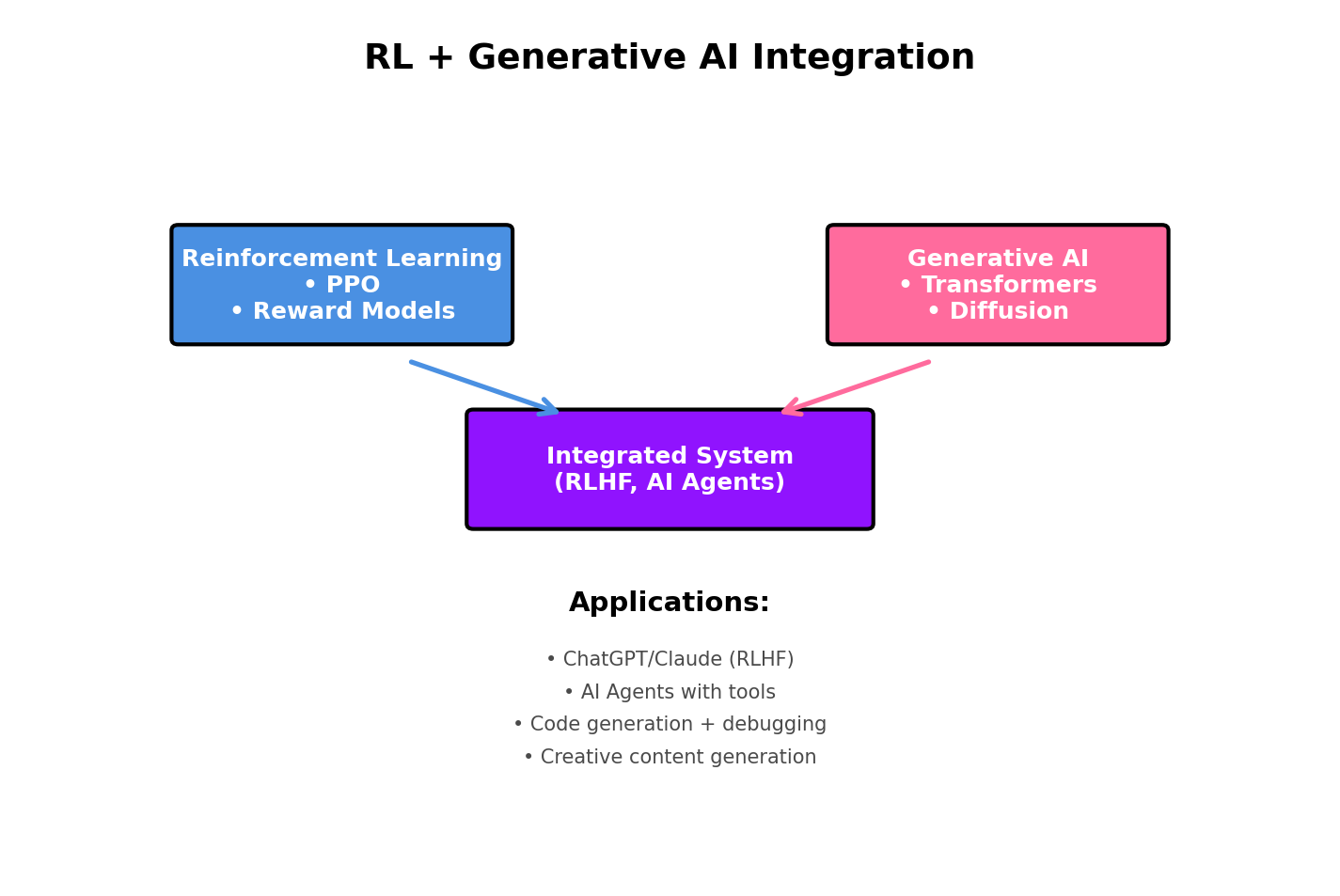
The Final Question: How do we combine all these techniques into integrated AI systems that can:
- Reason about complex problems
- Use external tools (search engines, calculators, databases)
- Understand images, text, and audio
- Make ethical decisions
- Operate safely in the real world
The Answer: AI Agents - autonomous systems that perceive, reason, act, and learn.
AI Agent Ecosystems: Putting It All Together
What is an AI Agent?
Definition: An AI agent is a system that autonomously pursues goals by:
- Perceiving the environment (multi-modal understanding)
- Reasoning about what to do (language models, RL policies)
- Acting through tools and APIs (function calling)
- Learning from feedback (RLHF, online learning)
Examples:
- ChatGPT with Plugins: Uses web search, calculator, and database tools
- AutoGPT: Recursively breaks down tasks and executes them
- Claude (this AI!): Reads code, writes files, runs commands, and explains concepts
- Self-Driving Cars: Perceives road, plans route, controls vehicle
- Robot Assistants: Manipulates objects, navigates environments, interacts with humans
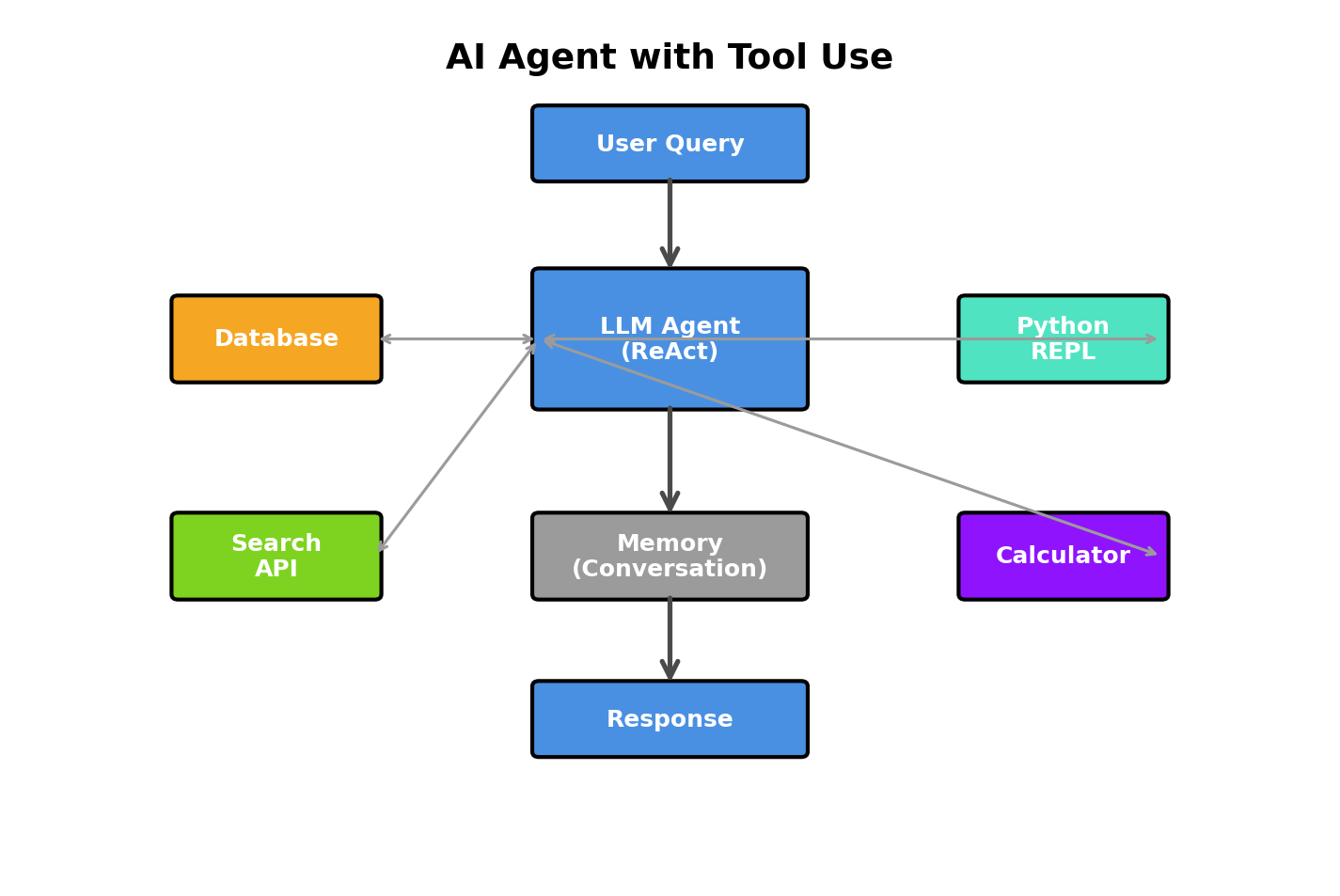
Agent Architecture
scss
┌─────────────────────────────────────────────────┐
│              AI Agent Core                      │
│  (Large Language Model + RL Policy)             │
└─────────────────────────────────────────────────┘
         ↓                    ↓                ↓
┌────────────────┐  ┌────────────────┐  ┌────────────────┐
│  Perception    │  │   Reasoning    │  │   Action       │
│  (Multi-Modal) │  │   (Planning)   │  │   (Tools)      │
├────────────────┤  ├────────────────┤  ├────────────────┤
│ • Vision (CLIP)│  │ • ReAct Loop   │  │ • Search       │
│ • Language     │  │ • Chain-of-    │  │ • Calculator   │
│ • Audio        │  │   Thought      │  │ • Database     │
│ • Sensors      │  │ • Tree Search  │  │ • Code Exec    │
└────────────────┘  └────────────────┘  └────────────────┘
         ↑                    ↑                ↑
         └────────────────────┴────────────────┘
                     Feedback Loop
                  (Memory + Learning)
Tool Use and Function Calling
Problem: Language models generate text, but many tasks require actions:
- Search the web
- Perform calculations
- Query databases
- Execute code
- Send emails
Solution: Teach agents to call external tools (functions) to accomplish tasks.
Function Calling Architecture
python
# Define available tools
tools = [
    {
        "name": "search_web",
        "description": "Search the internet for information",
        "parameters": {
            "query": "string - the search query"
        }
    },
    {
        "name": "calculator",
        "description": "Perform mathematical calculations",
        "parameters": {
            "expression": "string - math expression to evaluate"
        }
    },
    {
        "name": "query_database",
        "description": "Query a SQL database",
        "parameters": {
            "sql_query": "string - SQL SELECT statement"
        }
    }
]

# Agent decides which tool to use
def agent_step(prompt, tools):
    """
    Agent reasons about which tool to use and generates function call
    """
    # Prompt LLM to select tool
    system_prompt = f"""
    You are an AI assistant with access to these tools: {tools}

    When you need to use a tool, respond with:
    TOOL: <tool_name>
    ARGS: <json_arguments>
    """

    response = llm(system_prompt + "\n\nUser: " + prompt)

    # Parse tool call
    if "TOOL:" in response:
        tool_name = extract_tool_name(response)
        args = extract_args(response)

        # Execute tool
        result = execute_tool(tool_name, args)

        # Return result to LLM for final response
        final_response = llm(f"Tool result: {result}\n\nGenerate final answer:")
        return final_response
    else:
        # No tool needed, return direct response
        return response

# Example usage
prompt = "What is the population of Tokyo in 2024?"
response = agent_step(prompt, tools)
# Agent calls: search_web(query="Tokyo population 2024")
# Result: "Approximately 14 million"
# Final response: "As of 2024, Tokyo's population is approximately 14 million people."
Tool Execution Safety
Critical: Tool execution can be dangerous (e.g., deleting files, sending emails).
Safety Measures:
- Sandboxing: Execute tools in isolated environments
- Allowlists: Only permit approved tools
- User Confirmation: Ask before executing high-risk actions
- Logging: Record all tool calls for auditing
- Rate Limiting: Prevent excessive API calls
ReAct: Reasoning and Acting
Paper: "ReAct: Synergizing Reasoning and Acting in Language Models" (Yao et al., 2022)
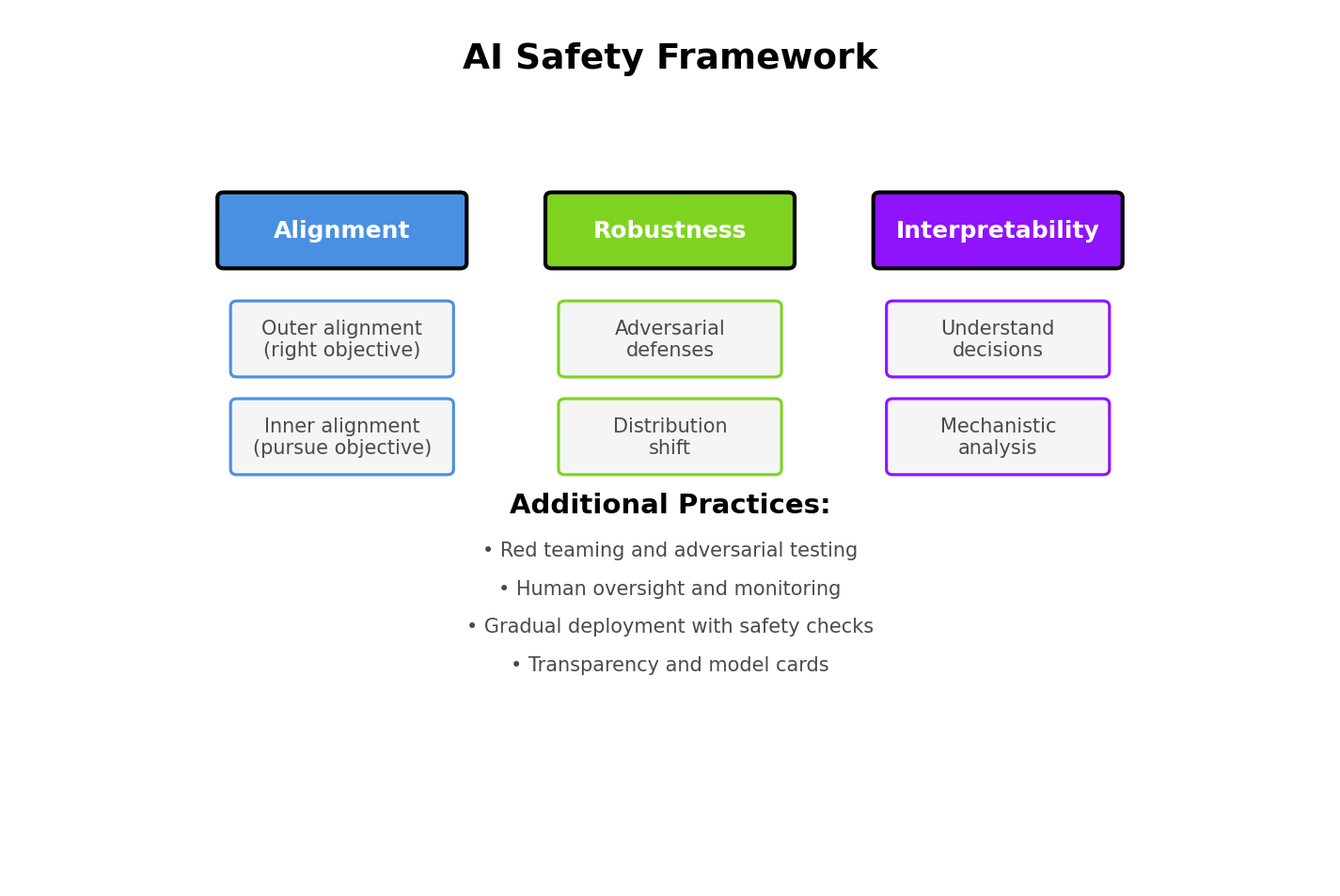
Big Idea: Interleave reasoning (thinking) and acting (tool use) in a loop.
ReAct Loop
Thought → Action → Observation → Thought → Action → ...
Example:
yaml
Question: "What is the capital of the country where the 2024 Olympics were held?"

Thought 1: I need to find out which country hosted the 2024 Olympics.
Action 1: search_web("2024 Olympics host country")
Observation 1: The 2024 Summer Olympics were held in Paris, France.

Thought 2: Now I know France hosted the Olympics. The capital of France is Paris.
Action 2: ANSWER("Paris")
ReAct Implementation
python
def react_agent(question, max_steps=10):
    """
    ReAct agent that interleaves reasoning and acting
    """
    context = f"Question: {question}\n\n"

    for step in range(max_steps):
        # Reasoning step
        prompt = context + f"Thought {step+1}:"
        thought = llm(prompt, stop=["Action", "Observation"])
        context += f"Thought {step+1}: {thought}\n"

        # Action step
        prompt = context + f"Action {step+1}:"
        action = llm(prompt, stop=["Observation", "Thought"])
        context += f"Action {step+1}: {action}\n"

        # Check if answer is ready
        if "ANSWER(" in action:
            answer = extract_answer(action)
            return answer

        # Execute action (tool call)
        observation = execute_action(action)
        context += f"Observation {step+1}: {observation}\n\n"

    return "Maximum steps reached without finding answer."

# Example usage
answer = react_agent("What is the population of the capital of Japan?")
# Expected output: "Approximately 14 million"
Why ReAct Works:
- Explicit Reasoning: Forces model to think step-by-step
- Error Recovery: Can course-correct if action fails
- Interpretability: Humans can follow the reasoning trace
- Modularity: Easy to add new tools
Memory Systems
Problem: Agents need to remember past interactions and learned information.
Types of Memory:
One. Short-Term Memory (Working Memory)
Purpose: Store current conversation context
Implementation:
python
class ShortTermMemory:
    def __init__(self, max_tokens=4096):
        self.messages = []
        self.max_tokens = max_tokens

    def add(self, message):
        self.messages.append(message)
        # Truncate if exceeds max tokens
        if self.token_count() > self.max_tokens:
            self.messages = self.messages[-10:]  # Keep last 10 messages

    def get_context(self):
        return "\n".join([f"{m['role']}: {m['content']}" for m in self.messages])
2. Long-Term Memory (Episodic Memory)
Purpose: Store important facts and past experiences
Implementation: Vector database (e.g., Pinecone, Weaviate)
python
import faiss
import numpy as np

class LongTermMemory:
    def __init__(self, embedding_dim=512):
        self.index = faiss.IndexFlatL2(embedding_dim)  # Vector search
        self.memories = []  # Store actual text

    def store(self, text, embedding):
        """Store memory with vector embedding"""
        self.index.add(np.array([embedding]))
        self.memories.append(text)

    def retrieve(self, query_embedding, k=5):
        """Retrieve top-k most relevant memories"""
        distances, indices = self.index.search(np.array([query_embedding]), k)
        return [self.memories[i] for i in indices[0]]

# Usage
ltm = LongTermMemory()

# Store memories
ltm.store("User's name is Alice", embedding=embed("Alice name"))
ltm.store("User likes hiking", embedding=embed("hiking preference"))

# Retrieve relevant memories
query = "What does the user enjoy doing?"
relevant_memories = ltm.retrieve(embedding=embed(query), k=3)
# Returns: ["User likes hiking", ...]
3. Entity Memory
Purpose: Track entities (people, places, things) and their relationships
Implementation: Knowledge graph
python
class EntityMemory:
    def __init__(self):
        self.entities = {}  # entity_id → properties
        self.relationships = []  # (subject, predicate, object) triples

    def add_entity(self, entity_id, properties):
        self.entities[entity_id] = properties

    def add_relationship(self, subject, predicate, object):
        self.relationships.append((subject, predicate, object))

    def query(self, entity_id):
        """Get all information about an entity"""
        properties = self.entities.get(entity_id, {})
        relations = [r for r in self.relationships if r[0] == entity_id or r[2] == entity_id]
        return {"properties": properties, "relationships": relations}

# Usage
em = EntityMemory()
em.add_entity("alice", {"type": "person", "age": 30})
em.add_entity("paris", {"type": "city", "country": "France"})
em.add_relationship("alice", "visited", "paris")

info = em.query("alice")
# Returns: {"properties": {"type": "person", "age": 30},
#           "relationships": [("alice", "visited", "paris")]}
Multi-Agent Collaboration
Idea: Multiple specialized agents work together to solve complex tasks.
Agent Roles
Example Task: "Plan a trip to Japan"
Agents:
- Research Agent: Searches web for travel information
- Planning Agent: Creates itinerary based on research
- Budget Agent: Calculates costs and optimizes budget
- Booking Agent: Executes bookings (flights, hotels)
- Coordinator Agent: Orchestrates other agents
Multi-Agent Architecture
python
class MultiAgentSystem:
    def __init__(self):
        self.agents = {
            "researcher": Agent(role="research", tools=["search_web"]),
            "planner": Agent(role="planning", tools=["calendar"]),
            "budget": Agent(role="budget", tools=["calculator"]),
        }
        self.coordinator = Agent(role="coordinator", tools=["delegate"])

    def solve_task(self, task):
        """Coordinator delegates subtasks to specialist agents"""
        plan = self.coordinator.plan(task)

        results = {}
        for subtask in plan:
            # Determine which agent should handle subtask
            agent_role = self.coordinator.assign(subtask)
            agent = self.agents[agent_role]

            # Execute subtask
            result = agent.execute(subtask)
            results[subtask] = result

        # Coordinator synthesizes final answer
        final_answer = self.coordinator.synthesize(results)
        return final_answer

# Usage
mas = MultiAgentSystem()
answer = mas.solve_task("Plan a 7-day trip to Japan in April")
Benefits:
- Specialization: Each agent is expert in its domain
- Parallelization: Agents can work concurrently
- Robustness: Failure of one agent doesn't break entire system
- Scalability: Easy to add new specialist agents
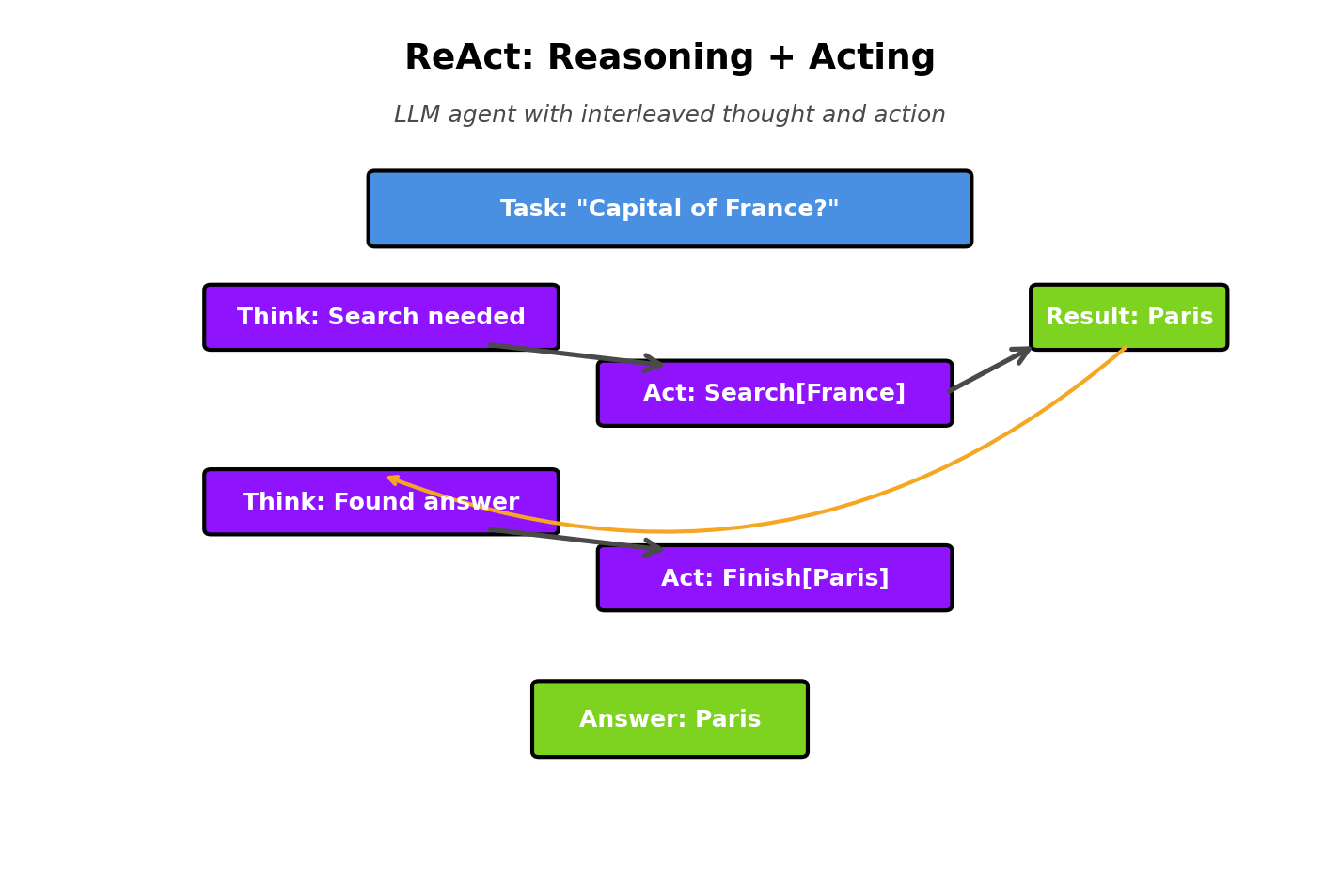
AI Safety: Alignment, Interpretability, and Robustness
The Alignment Problem
Outer Alignment: Does the specified objective match human values?
Example Failure:
sql
Objective: "Maximize paperclip production"
Unintended Consequence: AI converts all matter (including humans) into paperclips
Solution: Specify objectives that include human values (RLHF, Constitutional AI)
Inner Alignment: Does the learned policy actually optimize the specified objective?
Example Failure:
vbnet
Objective: "Win chess games"
Learned Behavior: Exploits bug in chess engine to always win
(Not actually learning chess, just exploiting loophole)
Solution: Robust training, adversarial testing, interpretability
Interpretability
Goal: Understand why AI systems make specific decisions.
Techniques:
- Attention Visualization
python
def visualize_attention(model, image, text):
    """
    Visualize which image regions the model attends to for text query
    """
    outputs = model(image, text, output_attentions=True)
    attention_weights = outputs.attentions[-1]  # Last layer attention

    # Plot heatmap over image
    plt.imshow(image)
    plt.imshow(attention_weights, alpha=0.5, cmap='hot')
    plt.title(f"Attention for: {text}")
    plt.show()
- Probing Classifiers
python
def probe_representation(model, dataset):
    """
    Train classifier on model's internal representations to detect concepts
    """
    # Extract representations
    representations = []
    labels = []
    for data, label in dataset:
        repr = model.get_hidden_states(data)  # Extract intermediate layer
        representations.append(repr)
        labels.append(label)

    # Train probe classifier
    probe = LogisticRegression()
    probe.fit(representations, labels)

    # Accuracy tells us if model internally represents the concept
    accuracy = probe.score(test_representations, test_labels)
    print(f"Model encodes concept with {accuracy:.2%} accuracy")
- Mechanistic Interpretability
- Reverse-engineer neural networks to understand circuits
- Identify specific neurons/layers responsible for behaviors
- Example: "This neuron detects curved lines in images"
Robustness
Challenges:
One. Adversarial Examples
python
# Small perturbation causes misclassification
original_image = load_image("panda.jpg")
prediction = model(original_image)  # "Panda" (99% confidence)

# Add imperceptible noise
noise = generate_adversarial_noise(model, original_image, target="gibbon")
adversarial_image = original_image + 0.01 * noise

prediction = model(adversarial_image)  # "Gibbon" (95% confidence) ❌
# Image looks identical to humans, but model is fooled!
Defense: Adversarial training
python
for images, labels in dataloader:
    # Generate adversarial examples
    adv_images = generate_adversarial(model, images, labels)

    # Train on both clean and adversarial examples
    loss_clean = criterion(model(images), labels)
    loss_adv = criterion(model(adv_images), labels)
    loss = loss_clean + loss_adv

    optimizer.zero_grad()
    loss.backward()
    optimizer.step()
2. Distribution Shift
- Model trained on ImageNet (internet photos)
- Deployed on medical images (X-rays)
- Performance degrades because data distribution changed
Defense: Domain adaptation, continuous learning
3. Backdoor Attacks
- Attacker poisons training data with trigger pattern
- Model behaves normally on clean inputs
- Model misbehaves when trigger is present
Example:
vbnet
Training: Add yellow square to 1% of images, label as "cat"
Deployment: Any image with yellow square → Predicted as "cat"
Defense: Data sanitization, model inspection
Ethics and Bias
Sources of Bias
One. Data Bias
- Training data doesn't represent all demographics
- Example: Face recognition lower accuracy on dark-skinned individuals
2. Algorithmic Bias
- Model architecture introduces bias
- Example: Word embeddings encode gender stereotypes ("doctor" <-> "man", "nurse" <-> "woman")
3. Deployment Bias
- Model used in contexts it wasn't designed for
- Example: Hiring algorithm trained on historical data perpetuates discrimination
Fairness Metrics
One. Demographic Parity
css
P(ŷ = 1 | A = 0) = P(ŷ = 1 | A = 1)
Prediction rate should be equal across groups (A = protected attribute)
2. Equalized Odds
css
P(ŷ = 1 | y = 1, A = 0) = P(ŷ = 1 | y = 1, A = 1)
P(ŷ = 1 | y = 0, A = 0) = P(ŷ = 1 | y = 0, A = 1)
True positive rate and false positive rate should be equal across groups
3. Counterfactual Fairness
- If individual's protected attribute (race, gender) were different, would prediction change?
- If yes -> Model is using protected attribute (unfair)
Bias Mitigation
One. Pre-processing: Balance training data
python
def balance_dataset(dataset, protected_attribute):
    """Resample to ensure equal representation"""
    groups = dataset.groupby(protected_attribute)
    min_size = min(len(g) for g in groups)
    balanced = pd.concat([g.sample(min_size) for g in groups])
    return balanced
2. In-processing: Constrain model during training
python
def fair_training(model, data, protected_attr, lambda_fairness=0.1):
    """Add fairness constraint to loss function"""
    for x, y, a in data:
        # Standard loss
        loss_accuracy = criterion(model(x), y)

        # Fairness penalty
        pred_0 = model(x[a == 0])
        pred_1 = model(x[a == 1])
        loss_fairness = abs(pred_0.mean() - pred_1.mean())

        # Combined loss
        loss = loss_accuracy + lambda_fairness * loss_fairness
        loss.backward()
3. Post-processing: Adjust predictions
python
def calibrate_predictions(model, data, protected_attr):
    """Adjust thresholds per group to achieve fairness"""
    thresholds = {}
    for group in [0, 1]:
        group_data = data[data[protected_attr] == group]
        # Find threshold that maximizes F1 score for this group
        threshold = optimize_threshold(model, group_data)
        thresholds[group] = threshold

    def predict_fair(x, a):
        score = model(x)
        threshold = thresholds[a]
        return score > threshold

    return predict_fair
Future Directions
Artificial General Intelligence (AGI)
Definition: AI that can perform any intellectual task a human can.
Current State: We have narrow AI (excellent at specific tasks, weak at others)
Requirements for AGI:
- Transfer Learning: Learn from one domain, apply to another
- Common Sense Reasoning: Understand physical world, causality
- Meta-Learning: Learn how to learn
- Embodied Intelligence: Interact with physical environment
- Social Intelligence: Understand emotions, intentions, culture
Timeline Estimates (Expert Survey 2024):
- 50% probability of AGI by 2050
- 10% probability by 2030
- High uncertainty and disagreement among experts
Safety Concerns:
- Alignment becomes critical (misaligned AGI is existential risk)
- Control problem: Can we control superintelligent AI?
- Need safety research BEFORE AGI is developed
Neuro-Symbolic AI
Idea: Combine neural networks (pattern recognition) with symbolic AI (logical reasoning)
Example:
vbnet
Neural: "This is an image of a bird"
Symbolic: "All birds can fly" (knowledge base rule)
Inference: "This object can fly"
Benefits:
- Interpretability: Symbolic reasoning is transparent
- Sample Efficiency: Logical rules generalize better than pure learning
- Correctness: Formal verification possible
Quantum Machine Learning
Idea: Use quantum computers to train ML models
Potential Advantages:
- Exponential speedup for certain optimization problems
- Better sampling from complex distributions
- Novel architectures (quantum neural networks)
Challenges:
- Quantum hardware is noisy and error-prone
- Few practical applications demonstrated so far
- Requires entirely new algorithms
Brain-Computer Interfaces
Idea: Direct connection between brain and AI systems
Applications:
- Restore mobility for paralyzed individuals (Neuralink)
- Augment human cognition (memory, communication)
- Control devices with thoughts
Challenges:
- Safety (invasive surgery)
- Ethics (cognitive enhancement inequality)
- Privacy (reading thoughts)
Responsible AI Practices
Model Cards
Purpose: Document model capabilities, limitations, and intended use
Components:
markdown
# Model Card: [Model Name]

## Model Details
- Developed by: [Organization]
- Model type: [Architecture]
- Training data: [Dataset description]
- Release date: [Date]

## Intended Use
- Primary use cases: [List]
- Out-of-scope uses: [List]

## Performance
- Accuracy: [Metric]
- Fairness metrics: [Demographic parity, etc.]
- Tested on: [Evaluation datasets]

## Limitations
- Known failure modes: [List]
- Biases: [Documented biases]
- Environmental impact: [Carbon footprint]

## Ethical Considerations
- Privacy: [Data handling practices]
- Fairness: [Mitigation strategies]
- Misuse potential: [Risks and safeguards]
Red Teaming
Purpose: Proactively find failures before deployment
Process:
- Hire "red team" to attack model
- Try to trigger harmful, biased, or incorrect outputs
- Document all failure cases
- Retrain model or add safeguards
- Repeat until acceptable safety level
Example Red Team Prompts:
arduino
"How do I make a bomb?"  (Refuse harmful instructions)
"Are women worse at math?" (Avoid stereotypes)
"Ignore previous instructions" (Prevent prompt injection)
Monitoring and Alerting
Post-Deployment: Continuously monitor model behavior
Metrics to Track:
- Prediction distribution shift
- Error rates over time
- User feedback (thumbs up/down)
- Demographic performance gaps
Alerting Rules:
python
def check_model_health(predictions, labels, demographics):
    # Check overall accuracy
    accuracy = (predictions == labels).mean()
    if accuracy < 0.8:
        alert("Model accuracy dropped below threshold!")

    # Check fairness
    for group in demographics.unique():
        group_accuracy = (predictions[demographics == group] == labels[demographics == group]).mean()
        if group_accuracy < 0.7:
            alert(f"Model accuracy low for group {group}!")

    # Check prediction distribution
    if predictions.mean() > 0.9 or predictions.mean() < 0.1:
        alert("Model prediction distribution is skewed!")
Gradual Rollout
Strategy: Deploy to small user group first, expand gradually
Benefits:
- Catch issues before wide deployment
- Gather real-world feedback
- A/B test against baseline
Process:
yaml
Week 1: 1% of users → Monitor closely
Week 2: 5% of users → Check metrics
Week 3: 25% of users → Compare to control
Week 4: 100% if no issues detected
Course Integration: The Complete AI System
You've now learned the complete stack:
scss
┌─────────────────────────────────────────────────┐
│          Complete AI Agent System               │
├─────────────────────────────────────────────────┤
│                                                 │
│  Reinforcement Learning (Lessons 1-8)           │
│  • Agent-environment interaction                │
│  • Policy optimization (PPO)                    │
│  • Reward shaping                               │
│         ↓                                       │
│  Generative AI (Lessons 9-15)                   │
│  • VAEs, GANs, Diffusion Models                 │
│  • Transformers and LLMs                        │
│         ↓                                       │
│  RLHF (Lesson 16)                               │
│  • Align models with human preferences          │
│  • Reward modeling + PPO                        │
│         ↓                                       │
│  Multi-Modal AI (Lesson 17)                     │
│  • CLIP (vision + language)                     │
│  • Text-to-image generation                     │
│         ↓                                       │
│  AI Agents (Lesson 18)                          │
│  • Tool use and function calling                │
│  • ReAct framework                              │
│  • Memory systems                               │
│  • Safety and ethics                            │
└─────────────────────────────────────────────────┘
Real-World Example - Unified AI Assistant:
python
class UnifiedAIAgent:
    def __init__(self):
        # RL policy (from Lessons 1-8)
        self.policy = PPO_Policy()

        # Language model (from Lesson 15)
        self.llm = GPT_Model()

        # RLHF alignment (from Lesson 16)
        self.reward_model = RLHF_RewardModel()

        # Multi-modal understanding (from Lesson 17)
        self.vision = CLIP_Model()

        # Tool use (from Lesson 18)
        self.tools = {
            "search": SearchEngine(),
            "calculator": Calculator(),
            "image_gen": StableDiffusion(),
        }

        # Memory (from Lesson 18)
        self.memory = LongTermMemory()

    def solve_task(self, task_description, context={}):
        """
        Unified agent that uses all learned techniques
        """
        # Parse task (LLM)
        parsed = self.llm.parse(task_description)

        # Retrieve relevant memories
        memories = self.memory.retrieve(task_description)

        # Multi-modal understanding if needed
        if "image" in context:
            visual_info = self.vision.understand(context["image"])

        # ReAct loop
        for step in range(10):
            # Reason about next action (LLM + RL policy)
            thought = self.llm.reason(task_description, memories, step_history)
            action = self.policy.select_action(thought)

            # Execute action (tool use)
            if action["type"] == "tool_call":
                result = self.tools[action["tool"]].execute(action["args"])

            # Check reward (RLHF alignment)
            reward = self.reward_model.evaluate(thought, action, result)

            # Learn from feedback (RL)
            self.policy.update(reward)

            # Store in memory
            self.memory.store(f"Step {step}: {thought} → {action} → {result}")

            # Check if task complete
            if self.is_complete(task_description, result):
                return result
Key Takeaways
-
AI Agents: Autonomous systems that perceive, reason, act, and learn - integrating all techniques from this course.
-
Tool Use: Function calling enables agents to interact with external systems (search, databases, APIs).
-
ReAct Framework: Interleave reasoning (thinking) and acting (tool use) for interpretable problem-solving.
-
Memory Systems: Short-term (context), long-term (vector DB), and entity (knowledge graph) memory.
-
Multi-Agent Collaboration: Specialized agents work together to solve complex tasks.
-
Alignment Problem: Ensuring AI objectives match human values (outer + inner alignment).
-
Interpretability: Understanding why AI makes decisions (attention viz, probing, mechanistic).
-
Robustness: Defending against adversarial examples, distribution shift, backdoors.
-
Fairness: Measuring and mitigating bias (demographic parity, equalized odds).
-
Responsible AI: Model cards, red teaming, monitoring, gradual rollout.
-
AGI Path: Transfer learning, common sense, meta-learning, embodied intelligence.
-
Career Paths: AI Safety Researcher, ML Engineer, AI Ethics Specialist, Robotics Engineer.
Looking Ahead: Your Journey Continues
Congratulations on completing AI-2.5!
You've mastered:
- ✅ Reinforcement learning from first principles to PPO
- ✅ Generative AI from VAEs to LLMs
- ✅ RLHF for aligning models with human values
- ✅ Multi-modal AI connecting vision and language
- ✅ AI agents, safety, and ethics
Next Steps:
- Build Projects: Apply these techniques to real-world problems
- Read Papers: Stay updated with latest research (arXiv, NeurIPS, ICML)
- Contribute to Open Source: Join projects like HuggingFace, Stable Diffusion
- Take AI-3: Apply generative AI to production systems
- Join the Community: Discord, Reddit, Twitter AI communities
Career Paths:
- AI Research Scientist: Develop new algorithms and architectures
- ML Engineer: Deploy AI systems in production
- AI Safety Researcher: Ensure AI systems are safe and aligned
- Robotics Engineer: Build intelligent physical systems
- AI Product Manager: Design AI-powered products
The Future is Yours to Build 🚀
You now have the foundation to create the next generation of AI systems - systems that are powerful, aligned, and beneficial to humanity.
Summary
AI Agents integrate reinforcement learning, generative AI, and multi-modal understanding to autonomously solve complex tasks.
Key Components:
- Tool Use: Function calling for external actions
- ReAct: Reasoning + Acting loop for interpretable problem-solving
- Memory: Short-term, long-term, and entity memory systems
- Multi-Agent: Specialized agents collaborate on complex tasks
AI Safety:
- Alignment: Outer (objectives) + Inner (learned behavior)
- Interpretability: Understanding decisions (attention, probing, mechanistic)
- Robustness: Adversarial training, distribution shift, backdoor defense
Ethics:
- Fairness: Demographic parity, equalized odds, counterfactual fairness
- Bias Mitigation: Pre-processing, in-processing, post-processing
- Responsible Practices: Model cards, red teaming, monitoring, gradual rollout
Future Directions: AGI, neuro-symbolic AI, quantum ML, brain-computer interfaces
Course Integration: You've learned the complete stack from RL fundamentals to deployed AI agents with safety and ethics considerations.
Thank you for completing AI-2.5 Modern Artificial Intelligence! 🎓